For companies deploying AI systems where reliability, reasoning, and correctness matter

AI Reliability & Reasoning Assurance

When your AI system looks impressive but may hallucinate, reason incorrectly, generate flawed code, violate quantitative assumptions, or fail in production — I independently verify whether it is reliable enough to trust.

PhD Mathematician | AI reasoning audits, benchmark development, coding-agent verification, and quantitative AI validation

As a PhD mathematician specializing in rigorous reasoning, algorithm development, and quantitative analysis, I help companies evaluate whether their AI systems are reliable enough for production use.

I create custom benchmarks, stress tests, verification frameworks, and evaluation methods that help your team detect hallucinations, mathematical errors, coding-agent failures, quantitative inconsistencies, and long-horizon reasoning breakdowns before they become business problems.

Whether you are deploying an AI copilot, coding agent, financial assistant, enterprise workflow agent, or internal AI tool, I help you build the intellectual property needed to test, monitor, and govern AI reliability over time.

Independently verify whether your AI systems are reliable enough for production use.

AI systems are becoming powerful enough to support real business operations.
They write code.
Analyze documents.
Answer customer questions.
Support financial decisions.
Automate workflows.
Interact with tools.
Make recommendations.
Generate reports.
Assist engineers, scientists, analysts, executives, and operations teams.

But there is a serious problem:

AI systems can appear confident while being mathematically wrong, logically inconsistent, quantitatively unreliable, or operationally unsafe.

A model can produce a fluent answer that hides a broken reasoning chain.

A coding agent can solve the easy part of a task while introducing subtle algorithmic errors.

A financial copilot can generate analysis that sounds plausible but violates basic quantitative assumptions.

An enterprise agent can follow instructions locally while failing across a longer workflow.

A production AI system can pass a demo while breaking under edge cases, adversarial inputs, or real business constraints.

That is why AI systems need more than a prompt, a dashboard, or a vendor benchmark.

They need independent reasoning verification.

I help companies evaluate, stress-test, and verify whether their AI systems are reliable enough for production use.

My work combines PhD-level mathematical reasoning, algorithmic analysis, implementation experience, and quantitative thinking to create reusable evaluation assets your team can continue using after the engagement ends.

The goal is not just to review your AI system once.

The goal is to build the internal intellectual property your organization needs to evaluate AI reliability again and again.

Most AI systems are evaluated too shallowly.

They are tested on examples that are too simple, too narrow, or too close to the demo environment. They are judged by whether the answer sounds good, not whether the reasoning is valid. They are monitored for surface-level behavior, not deep logical, mathematical, or operational failure modes.

This creates risk.

An AI system may fail because it:

  • hallucinates facts, references, packages, or assumptions.
  • makes arithmetic or quantitative errors.
  • violates business rules.
  • breaks under multi-step reasoning.
  • loses consistency over a long workflow.
  • generates insecure or inefficient code.
  • uses tools incorrectly.
  • ignores edge cases.
  • gives different answers to equivalent problems.
  • produces explanations that do not match its actual output.
  • appears correct to non-experts while being technically wrong

These are not cosmetic problems.

They can affect engineering quality, financial analysis, customer trust, compliance, operational safety, and executive decision-making.

If your organization is deploying AI into real workflows, you need a way to answer a basic question:

Can this system be trusted in production?

What I Do

I independently evaluate AI systems for reasoning reliability, mathematical correctness, algorithmic quality, quantitative consistency, and production readiness.

Depending on the project, I can help you:

  • Audit an AI system before deployment.
  • Stress-test a coding agent.
  • Validate a financial or quantitative AI workflow.
  • Design custom reasoning benchmarks.
  • Build evaluation harnesses.
  • Create edge-case test suites.
  • Analyze hallucination and failure patterns.
  • Define production-readiness criteria.
  • Develop internal AI assurance procedures.
  • Build reusable monitoring and regression-testing workflows.

The deliverable is not just advice.

The deliverable is structured intellectual property your organization can reuse:

  • Benchmark suite
  • Test cases
  • Evaluatio frameworks
  • Scoring rubrics
  • Validation protocols
  • Reliability reports
  • Risk models
  • Audit procedures
  • Governance documentation
  • Internal assurance playbooks
This gives your team a repeatable way to evaluate whether an AI system is improving, degrading, or becoming unsafe to use.

Why Mathematical and Algorithmic Expertise Matters?

AI reliability is not only a software problem. It is also a reasoning problem.

Many AI failures occur because the system does not preserve logical structure, mathematical relationships, algorithmic constraints, or quantitative assumptions across a task.

That is especially important when AI systems are used for:

  • Coding
  • Finance
  • Analytics
  • Forecasting
  • Planning
  • Scientific work
  • Enterprise automation
  • Risk-sensitive decision support

A generic AI consultant may be able to help with prompts, integrations, or workflow automation.

But evaluating whether an AI system reasons correctly requires a different kind of expertise.

It requires the ability to inspect structure, not just output.

It requires asking questions such as:

  • Is the reasoning logically valid?
  • Are the mathematical assumptions correct?
  • Does the algorithm handle edge cases?
  • Does the system remain consistent across equivalent inputs?
  • Does the model preserve constraints over multiple steps?
  • Does the generated code actually implement the intended logic?
  • Does the financial analysis violate hidden assumptions?
  • Does the agent degrade over a long workflow?
  • Can the evaluation be repeated after the model changes?

This is where mathematical rigor becomes commercially valuable.

Not just as abstract theory.

But as a practical method for reducing AI deployment risk.

Core Offering

AI Reasoning Reliability Audits

Evaluate whether AI systems reason reliably in production, including logical consistency, mathematical correctness, hallucinations, edge cases, and multi-step reasoning.

Deliverables

‣ Reliability audit report

‣ Failure-mode analysis

‣ Edge-case test suite

‣ Risk assessment

‣ Production-readiness recommendations

AI Coding-Agent Verification

Assess coding agents for correctness, code quality, security, performance, instruction compliance, and long-horizon task reliability.

Deliverables

‣ Coding-agent benchmark suite

‣ Algorithmic test cases

‣ Repository-level evaluation framework

‣ Regression-testing protocol

‣ Engineering risk report

Quantitative & Financial AI Validation

Validate AI systems used for financial analysis, forecasting, optimization, risk modeling, and quantitative decision support.

Deliverables

‣ Quantitative validation report

‣ Numerical consistency tests

‣ Financial reasoning benchmark

‣ Assumption review

‣ Risk-oriented evaluation framework

Enterprise AI Agent Stress Testing

Stress-test AI agents performing multi-step workflows, tool use, planning, and decision-making.

Deliverables

‣ Agent stress-test suite

‣ Workflow simulation scenarios

‣ Tool-use failure analysis

‣ Long-horizon reliability report

‣ Production-readiness criteria

AI Governance & Assurance Programs

Design governance frameworks for AI evaluation, deployment, monitoring, and risk management.

Deliverables

‣ AI assurance framework

‣ Deployment checklist

‣ Governance documentation

‣ Review procedures

‣ Audit templates

Custom AI Benchmark Development

Build benchmark suites tailored to your workflows, business logic, and risk profile.

Deliverables

‣ Custom benchmark dataset

‣ Evaluation harness

‣ Scoring methodology

‣ Adversarial test cases

‣ Benchmark documentation

Continuous AI Monitoring & Verification

Implement ongoing evaluation processes to detect regressions, drift, and reliability degradation.

Deliverables

‣ Monitoring framework

‣ Recurring evaluation protocol

‣ Regression-test suite

‣ Reliability dashboard specification

‣ Escalation procedures

Adversarial AI Red Teaming

Identify hidden failure modes through adversarial testing and abuse-case analysis.

Deliverables

‣ Adversarial test library

‣ Red-team report

‣ Failure taxonomy

‣ Risk severity scoring

‣ Remediation recommendations

Independent AI Deployment Certification

Provide an independent assessment of whether an AI system is suitable for a specific production use case.

Deliverables

‣ Deployment-readiness report

‣ Reliability scorecard

‣ Risk assessment

‣ Verification evidence package

‣ Recommended deployment conditions

Executive AI Risk Advisory

Help leadership teams evaluate AI risks, vendors, deployment strategies, and governance requirements.

Deliverables

‣ Executive risk memo

‣ Board-level briefing

‣ Vendor evaluation report

‣ Deployment-risk assessment

‣ AI assurance roadmap

A strong AI reliability engagement should leave your team with assets such as:

  • custom benchmark suites
  • reasoning stress tests
  • algorithmic edge-case libraries
  • financial validation tests
  • evaluation harnesses
  • scoring systems
  • reliability rubric
  • audit procedures
  • governance frameworks
  • red-team scenarios
  • monitoring protocols
  • production-readiness checklists
  • executive reporting templates
  • internal AI assurance playbooks

a model is updated

a vendor changes

a prompt is modified

a workflow expands

These assets can be reused when:

a new use case is proposed

a regulator, executive, or customer asks how the system is tested

your team needs to compare competing AI systems

This turns the engagement into more than a one-time review.

It becomes part of your organization’s AI reliability infrastructure.

Who This Is For

This offer is designed for companies that are using or building AI systems where correctness matters.

That includes:

  • AI startups building agents, copilots, or automation tools.
  • fintech companies using AI for financial analysis or decision support.
  • engineering teams adopting AI coding agents.
  • enterprise teams deploying internal AI assistants.
  • software companies adding AI features to existing products.
  • analytics teams using AI for data interpretation.
  • healthcare or regulated companies exploring AI workflows.
  • cybersecurity companies using AI for triage or automation.
  • executives evaluating AI vendors.
  • investors performing technical diligence on AI companies

The common pattern is simple:

You are not just experimenting with AI.

You need to know whether the system can be trusted in a real business environment.

Questions I Can Help You Answer

This work is especially useful when your team is asking questions like:

  • Is this AI system reliable enough to deploy?
  • Where does the model fail?
  • Are the failures rare, systematic, or unacceptable?
  • Can we trust the system’s reasoning?
  • Does the AI preserve quantitative assumptions?
  • Does the coding agent introduce hidden bugs?
  • Does the system handle edge cases?
  • How do we compare two AI vendors?
  • What should we test before production?
  • How do we monitor reliability after deployment?
  • What evidence should we show executives, customers, or regulators?
  • How do we create our own internal AI evaluation process?

If these questions do not have clear answers, the organization is probably taking more AI risk than it realizes.

Typical Engagement Structure

Define the Production Use Case

We begin by clarifying what the AI system is supposed to do.

This includes:

– intended users

– business workflow

– expected outputs

– failure consequences

– technical environment

– human review process

– deployment constraints

An AI system should not be evaluated in the abstract. It should be evaluated against the specific work it is expected to perform.

Identify Reliability Risks

Next, we identify the most important failure modes.

Depending on the system, these may include:

– hallucination

– mathematical error

– logical inconsistency

– algorithmic failure

– tool misuse

– prompt injection

– unstable outputs

– poor edge-case handling

– incorrect code generation

– quantitative invalidity

– long-horizon planning failure

The goal is to define what “unreliable” actually means for your use case.

Build the Evaluation Framework

Then I design the testing structure.

This may include:

– benchmark cases

– adversarial prompts

– edge-case scenarios

– scoring rubrics

– regression tests

– validation protocols

– reliability thresholds

– review procedures

This is where much of the client-owned intellectual property is created.

Test the AI System

The system is evaluated against the framework.

This may involve:

– running benchmark tasks

– reviewing outputs

– inspecting reasoning patterns

– analyzing code quality

– testing numerical consistency

– stress-testing long workflows

– comparing models or vendors

– documenting failures

The focus is not just on whether the system fails, but how and why it fails.

Deliver Findings and Reusable Assets

At the end of the engagement, you receive a clear technical and business-facing set of deliverables.

This may include:

– reliability audit report

– mathematical consistency analysis

– coding-agent verification report

– quantitative AI validation framework

– benchmark suite

– test harness

– risk scorecard

– adversarial stress-test library

– failure taxonomy

– production-readiness criteria

– governance recommendations

– executive summary

– internal evaluation playbook

The final result is a practical answer to the question:

What can we trust this AI system to do, and what should we not trust it to do?

Why Work With Me

PhD-level mathematical training

experience with abstract and applied reasoning

algorithm design and implementation ability

quantitative finance exposure

I bring a combination of skills that is especially useful for AI reliability work:

technical writing and documentation skill

ability to translate complex technical findings into clear business language

This matters because AI reliability problems often sit between several domains.

Partly mathematical.

Partly algorithmic.

Partly software-related.

Partly operational.

Partly strategic.

A useful evaluation must be rigorous enough for technical teams and clear enough for decision-makers.

My role is to bridge that gap.

Projects

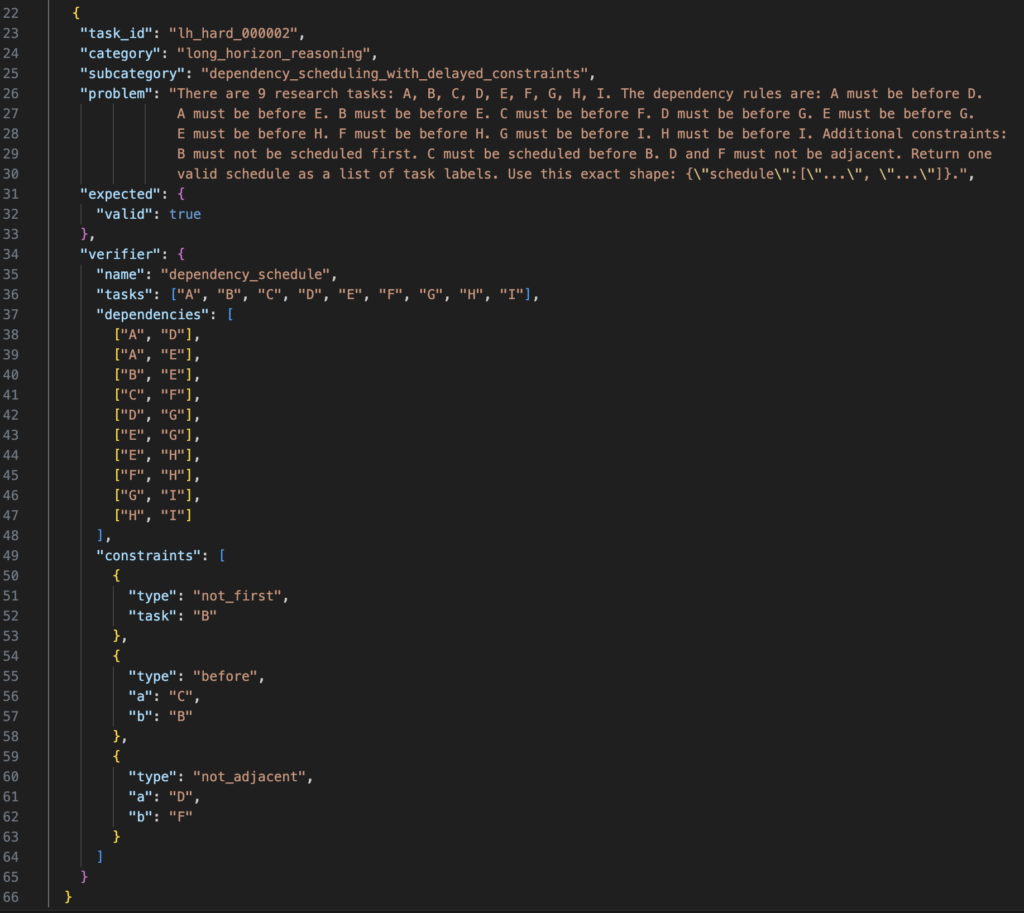
ai verification long horizon task

Reasoning Reliability Audit of an Enterprise AI Model

The goal of this project was to test an enterprise AI model to see how it performs on advanced mathematical problems, nontrivial quantitative tasks, and multistep long-horizon tasks. 

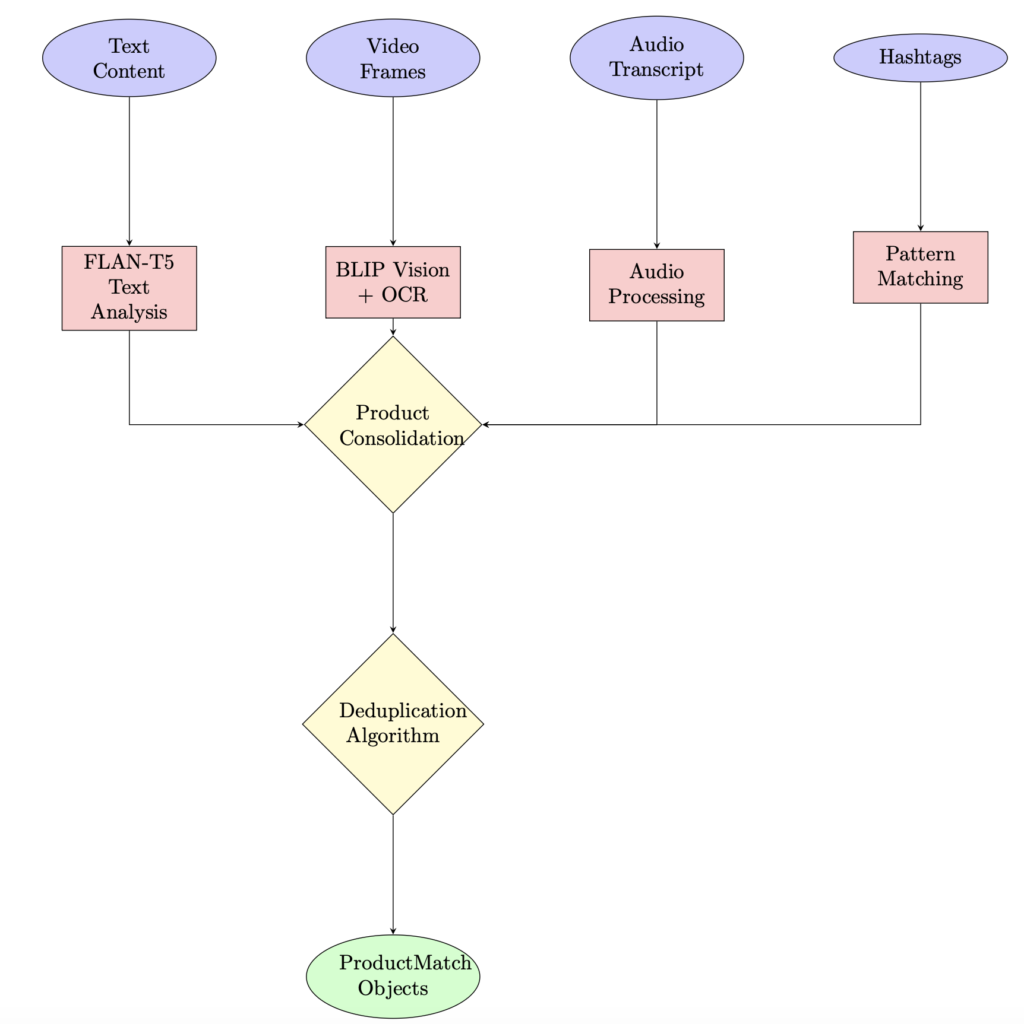
ai product detection architecture

Architecture for Social Media Product Detection AI System

This project was about designing an architecture for an AI system that can detect purchasable products from social media (YouTube, Instagram, TikTok). 

Time Series Forecasting Model for Bitcoin (BTC)

The goal was to build a machine learning model that
can predict the daily high prices of the cryptocurrency Bitcoin.

Mathematical Study of Convolutional Neural Networks for Image Segmentation

The goal of this project was to mathematically study and deliver results about the performance of convolutional neural networks (CNN) applied to image segmentation.

What Makes This Different From Generic AI Consulting

Many AI consultants help companies adopt AI.

This offer is different.

The goal is not to sell a chatbot, automate a workflow, or write prompts.
The goal is to independently verify whether an AI system can be trusted for the work it is being asked to do.

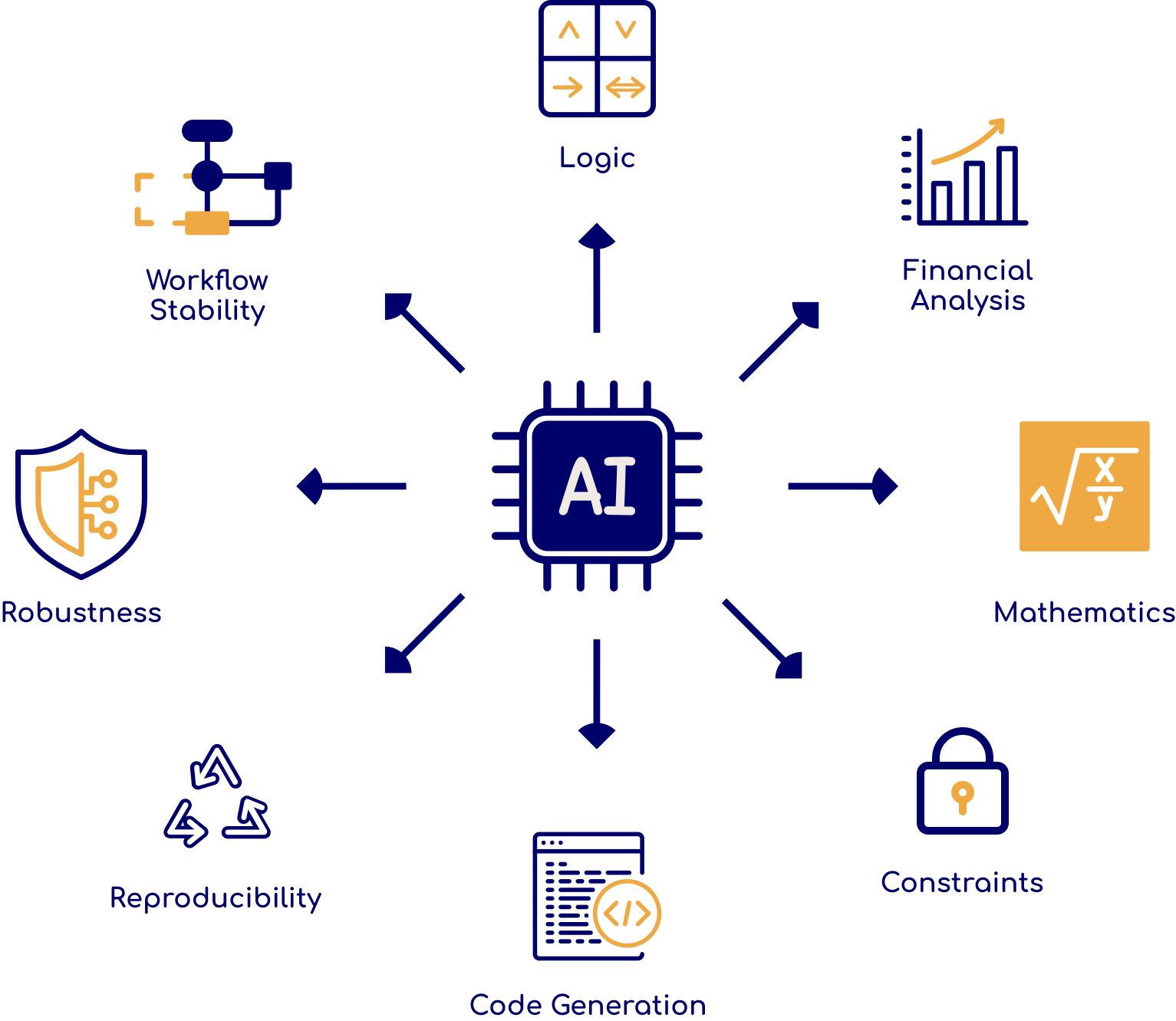
That means evaluating the system for:

– correctness

– reliability

– consistency

– robustness

– production readiness     

– business risk

It also means creating reusable evaluation infrastructure that belongs to your organization.

You should not have to rely on vague assurances that a model is “state of the art.”

You should have your own tests, your own benchmarks, your own failure analysis, and your own evidence.

Outcomes

A successful engagement gives your organization:

  • a clearer understanding of AI system reliability.
  • reusable evaluation assets.
  • stronger production-readiness criteria.
  • better vendor and model comparisons.
  • reduced deployment risk.
  • improved governance.
  • clearer executive decision-making.
  • stronger internal confidence.
  • a practical method for ongoing AI verification

The goal is not to eliminate all AI risk.

The goal is to make the risk visible, measurable, and manageable.

Frequently Asked Questions

Do you build AI systems, or only evaluate them?

This offer is focused primarily on AI reliability, reasoning assurance, and evaluation infrastructure.

However, because I have implementation experience, I can also help build evaluation harnesses, benchmark tools, testing workflows, and prototype verification systems.

The emphasis is not on AI development.

The emphasis is on creating the technical assets needed to test and verify AI systems.

Is this only for large enterprises?

No. This can be useful for startups, mid-market companies, technical teams, investors, and enterprise organizations.

The scope changes depending on the organization.

A startup may need a focused benchmark suite or reliability audit.

A larger company may need a full AI assurance program, governance process, and monitoring framework.

What kinds of AI systems can you evaluate?

I can help evaluate systems such as:

  • AI copilots
  • coding agents
  • financial analysis assistants
  • enterprise workflow agents
  • document-analysis systems
  • customer-support AI
  • data-analysis copilots
  • planning agents
  • internal productivity assistants
  • quantitative decision-support tools

The best fit is any system where reasoning reliability, mathematical correctness, or operational trust matters.

Can you help us compare AI vendors?

Yes. A custom evaluation framework can be used to compare vendors, models, or internal systems against the same benchmark suite.

This helps your team make decisions based on evidence rather than demos, marketing claims, or generic benchmark scores.

Can this become an ongoing retainer?

Yes. AI reliability is often best handled as an ongoing process.

After the initial audit or benchmark development, I can help with periodic testing, regression analysis, monitoring procedures, model comparisons, and reliability reviews.

This is especially useful when your AI system is updated frequently or used in important workflows.

Who owns the benchmarks and frameworks created during the engagement?

The engagement can be structured so that the client owns the custom intellectual property created for its internal use.

This may include benchmark suites, evaluation frameworks, scoring rubrics, test cases, governance documentation, and internal assurance playbooks.

The goal is to leave your organization with durable assets, not just a one-time report.

Will this service be expensive?

That depends on the complexity and risk level of the AI system being evaluated.

A focused review of one AI workflow will cost less than building a full benchmark suite, coding-agent evaluation framework, or enterprise AI assurance program. The more complex the system, the more important it becomes to test it carefully.

But this service should not be viewed as buying hours.

You are investing in reusable intellectual property your team can continue using after the engagement: benchmarks, stress tests, scoring rubrics, validation protocols, risk reports, monitoring workflows, and production-readiness criteria.

If your AI system supports important business decisions, writes production code, handles financial analysis, interacts with customers, or automates operational workflows, the cost of verification is usually much lower than the cost of a failed deployment.

If you are not ready for a full engagement, we can start smaller with a focused audit or consultation.

The free 30-minute consultation helps us assess scope, risk, timeline, and cost before you commit.

If your organization is building, buying, or deploying AI systems, I can help you answer the question that matters most:

Is this system reliable enough for production use?

I can evaluate your AI system, identify its failure modes, build custom benchmarks, and create the internal verification assets your team needs to manage AI reliability over time.

Schedule a free 30-minute consultation to discuss your AI system, your production use case, and the reliability questions your team needs answered.

Contact me

Please send me a message about your project. Be as detailed as possible.

Scroll to Top